
Pas de version française pour l’instant
Beyond Appearances: Who Really Comprises People with Reduced Mobility and Those with Visible or Invisible Disabilities?
When discussing accessibility in a natural space, a historical site, or a festive event, the collective imagination is all too often limited to a single figure: the wheelchair user. However, reality on the ground is infinitely richer and more diverse.
To better understand the needs faced when encountering everyday obstacles (slopes, uneven ground, stairs, crowds), it is essential to distinguish and define the different profiles that make up our society.
1. Situations of Disability: The Visible and the Invisible
A disability is not simply a medical condition; it manifests whenever an architectural, natural, or organizational layout blocks a person’s autonomy.
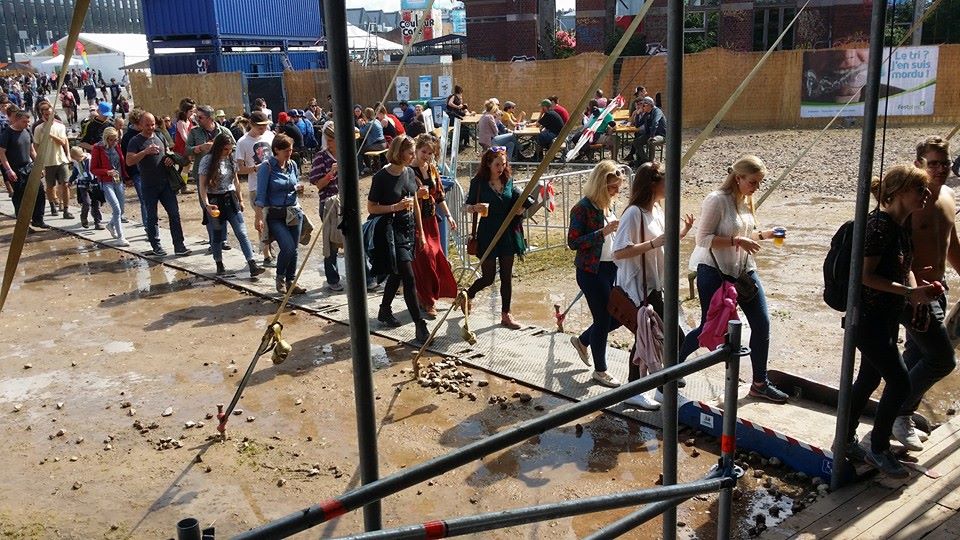
- Visible Motor Disability: This concerns individuals whose walking ability is permanently altered. This profile relies on essential technical aids to move around: wheelchairs (manual or electric), walkers, or canes. When faced with cobblestones, mud at a festival, or the steps of a historical monument, their progression becomes a major physical challenge.
- Invisible Disability:Yet, this represents 80% of all disability situations. It is not noticeable at first glance, but it radically transforms how a venue is experienced.
- Invalidating or Chronic Pathologies: Respiratory or heart failure, multiple sclerosis, fibromyalgia, or the after-effects of a stroke (such as hemiparesis). For these individuals, walking is possible, but fatigue is immense. The absence of benches or regular rest areas constitutes a genuine invisible wall.
- Sensory Impairments: Visually impaired or blind individuals (who navigate using a white cane) and those who are hard of hearing. A lack of ground markings or poor signage isolates them.
- Cognitive or Psychological Disorders: (Autism, neurodevelopmental disorders, severe anxiety). The hustle and bustle of a large event or the complexity of navigating historical ruins can cause sensory overload and complete disorientation.
2. People with Reduced Mobility (PRM): A Universal Definition
The term PRM is often mistaken as referring solely to motor disabilities. In reality, its legal and practical definition is much broader: it encompasses anyone whose mobility is hindered when moving around, whether temporarily or permanently, depending on their situation or environment.
- The Aging Process (Seniors): Without necessarily speaking of a disability, aging brings about a natural decline in balance, muscle strength, and vision. A forest path strewn with roots or the steps of an old castle without a handrail become high-risk areas for falls.
- Temporary Body Changes:
- Pregnancy: Over the months, pregnant women experience a shift in their center of gravity, increased fatigue, and a critical need for quick access to amenities or seating areas.
- Temporary Injuries: A sprain, a leg in a cast, or post-operative recovery instantly places any individual into the PRM category, relying on crutches over slippery or uneven terrain.
- Pregnancy: Over the months, pregnant women experience a shift in their center of gravity, increased fatigue, and a critical need for quick access to amenities or seating areas.
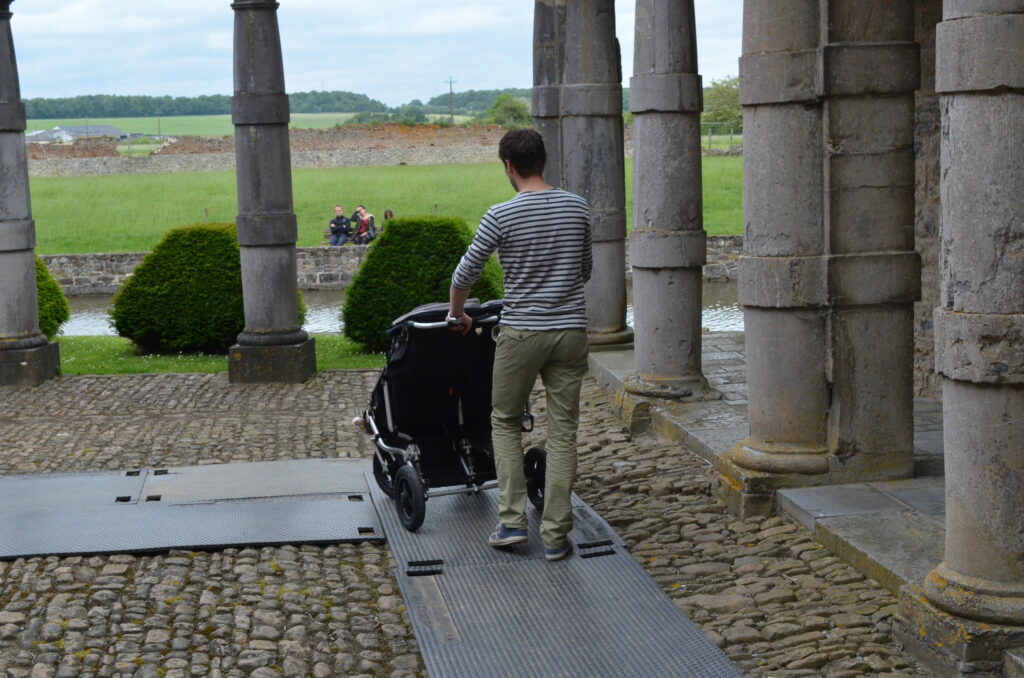
- Loads and Handling (Logistical Profiles): This is the aspect most frequently forgotten. A person in perfect health becomes “mobility impaired” the moment they must push a stroller over soft ground, carry heavy luggage, or maneuver a cart of tools and equipment to set up structures for a festival. Physical obstacles (steps, narrow passages) have the exact same blocking impact on them as they do on other profiles.
Conclusion
Designing the layout of a festive, natural, or historical site with these profiles in mind leads to a fundamental realization: accessibility is not an optional adjustment for a minority. It is a chain of comfort that, at one point or another in our lives, becomes necessary for every one of us.
Since far more people than just wheelchair users are affected, it is vital to stop viewing accessibility as a cost for a minority, but rather as an investment in the well-being of everyone.
(…)